
Cadmium (Cd)

Cadmium (Cd) is a chemical element with an atomic number of 48 in the periodic table of elements. Found in Earth’s crust at about 0.5 ppm (parts per million), it belongs to the group of rare metals. As a member of both the transition and toxic metals family of periodic table elements, this naturally occurring … Read more
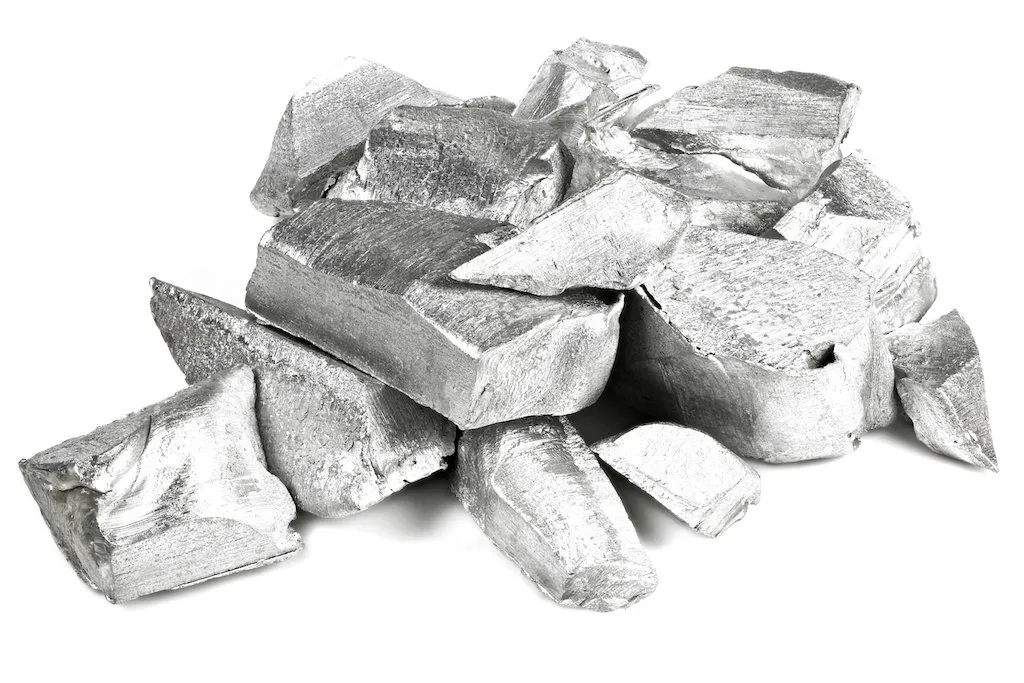
Gallium Facts

Gallium (Ga) is a chemical element with an atomic number of 31 in the periodic table of elements. It mainly occurs as a part of the chemical compounds found in Earth’s crust, in a quantity of 0.0005%.  This chemical substance is a member of the boron family (group 13), which includes the semi-metal boron (B) … Read more

Zinc (Zn)

Element (Zn) Zinc is a chemical element with the atomic number 30 in the periodic table. It’s the 24th most abundant element in Earth’s crust. As a member of the transition metals family of elements, zinc is a divalent chemical that forms numerous compounds with wide application in medicine and almost all industrial branches. Today, … Read more

Aluminium (Al)

image of pure aluminum

Aluminium is a chemical element with the atomic number 13 in the periodic table of elements. It’s the most plentiful metal found in the Earth’s crust. Being a member of the boron family of periodic table elements, this strong and light-weight metal has three valence electrons that help aluminium make numerous compounds with the other … Read more

Iridium (Ir)

Iridium is a chemical element with atomic number 77 in the periodic table. In Earth’s crust, this precious metal occurs in scarce amounts. As a member of the platinum family of periodic table elements, iridium is characterized by a high density and hardness. It has nine valence electrons that can occur in the oxidation states … Read more

Rhodium (Rh)

Rhodium is a chemical element with the atomic number 45 in the periodic table. It’s an extremely rare metal that is found in Earth’s crust with an abundance of 0.0002 parts per million.  Being a member of the platinum group of periodic table elements, this noble metal has three valence electrons and is highly appreciated … Read more

Cobalt (Co)

Cobalt is a chemical element with an atomic number of 127 in the periodic table of elements. It occurs abundantly in Earth’s crust, but mostly in a compound form. This strong ferromagnetic element is a member of the transition metals family in the periodic table. Having two valence electrons, cobalt is a relatively active but … Read more

Hassium

Hassium is a synthetically produced chemical element with an atomic number of 108 in the periodic table. Due to its atomic weight which is greater than 92, this radioactive substance is classified as a transuranium element. The eight-valent element also belongs to the family of transition metals.  Chemical and Physical Properties of Hassium Property Value … Read more

Osmium (Os)

Osmium is a chemical element with the atomic number 76 in the periodic table. It’s one of the rarest chemical elements that occur in Earth’s crust, with 1.5×10⁻³ ppm of natural abundance.  Being a member of the platinum group metals (PGM), this noble metal with a pungent odor and high toxicity has many applications in … Read more

Ruthenium (Ru)

Ruthenium is a chemical element with the atomic number 44 in the periodic table. Its abundance in Earth’s crust is calculated to be 0.0001 ppm.  Element 44 is a rare transition metal classified in the platinum family of elements. This very rare noble metal has only one valence electron which makes ruthenium inert to most … Read more